
The Heartland’s Agri-Tech Revolution: Cultivating Innovation and Growth in Central India
For generations, the fertile plains of Central India have been the bedrock of the nation’s agricultural output. Madhya Pradesh, a heartland state, is a significant contributor to India’s food basket, boasting diverse agro-climatic zones and a rich agrarian heritage. However, this traditional strength is now being augmented by a powerful wave of innovation. Agri-Tech is no longer a nascent concept but a burgeoning force, transforming age-old farming practices with data, automation, and cutting-edge technology. This revolution is not merely modernizing a sector; it’s cultivating a vibrant new ecosystem for startups, creating unprecedented opportunities for entrepreneurs in cities like Indore, Bhopal, Jabalpur, and Gwalior. As India’s AgriTech market is projected for substantial growth, Central India is uniquely positioned to capture a significant share, heralding a new era of economic prosperity and sustainable farming. This transformation is a testament to the spirit of innovation thriving in the heartland, aligning perfectly with the mission of TiE Indore to foster entrepreneurship and growth.
What’s Happening: The Data-Driven Harvest
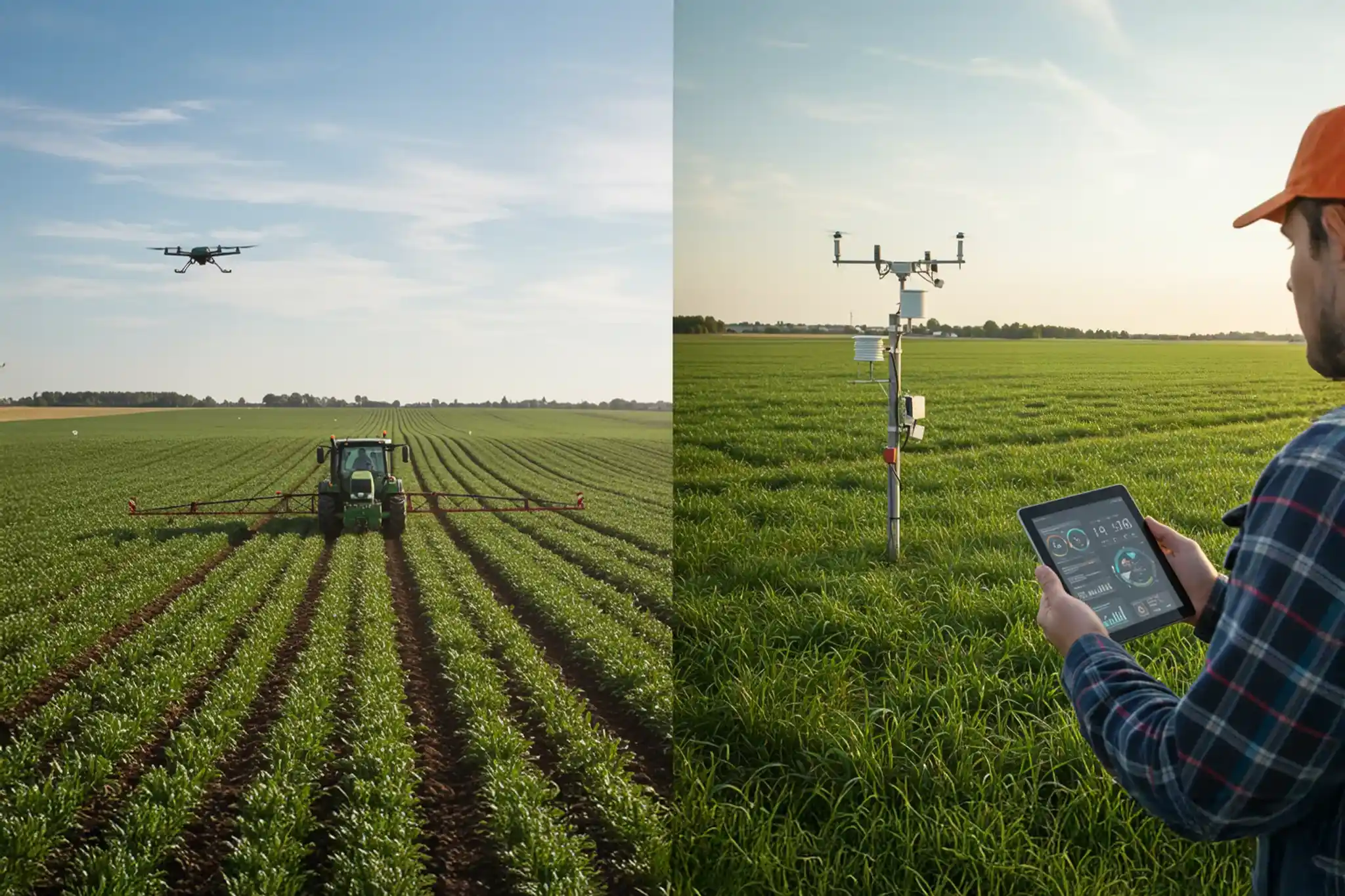
The agricultural sector in India, and particularly in Central India, is undergoing a profound digital transformation. This shift is driven by a confluence of factors: increasing government support through initiatives like the Startup India initiative and the Digital Agriculture Mission, widespread smartphone penetration in rural areas, and growing investor confidence in the Agri-Tech space. Startups are deploying innovations such as Artificial Intelligence (AI), the Internet of Things (IoT), drones, and blockchain to address long-standing agricultural challenges. These technologies are not abstract concepts; they are tangible tools creating real-world impact. AI-powered platforms provide farmers with predictive insights on everything from weather patterns to pest infestations, while IoT sensors monitor soil health and optimize water usage with precision.
Madhya Pradesh, with its significant agricultural output, is a prime beneficiary and incubator of this revolution. The state government’s focus on improving irrigation infrastructure, rural connectivity, and adopting technology in agriculture is creating a fertile ground for innovation. Initiatives like the ‘Namo Drone Didi’ program aim to empower women-led self-help groups with drone operation skills, enhancing efficiency and safety in crop management. Furthermore, the AgriStack initiative is building a crucial data backbone, aiming to create a user-centric framework for targeted subsidies, credit, and advisories by linking agricultural identification with land records and cropping patterns. This digital infrastructure is vital for making agriculture more resilient and profitable.
The market potential is immense. India’s Agri-Tech market is projected to reach significant figures, and Central India, with its vast agricultural base and emerging startup ecosystem, is poised to capture a substantial portion of this growth. Companies are focusing on various sub-sectors, including precision farming, agri-fintech, online marketplaces, AI-driven solutions, Farming-as-a-Service (FaaS), and supply chain optimization. The recent merger of Indore-based Gramophone with Unnati signifies the consolidation and growth within the sector, creating a significant full-stack Agri-Tech player in the region. This dynamic landscape presents a compelling opportunity for entrepreneurs to innovate and scale.
Why It Matters: Cultivating Impact Beyond the Farm
The rise of Agri-Tech in Central India is more than just technological advancement; it’s a catalyst for socio-economic development and sustainability. For farmers, the impact is direct and profound. Precision farming techniques, enabled by IoT sensors and AI, lead to optimized use of water, fertilizers, and pesticides, significantly reducing input costs and minimizing environmental impact. Predictive analytics and real-time data empower farmers to make informed decisions, leading to increased yields and better crop quality. This translates into higher incomes and improved livelihoods, addressing the critical challenge of farmer profitability in the region.
Beyond the farm gate, Agri-Tech is reshaping the entire agricultural value chain. Innovations in supply chain management, such as blockchain for traceability and IoT-enabled cold storage, are crucial for reducing post-harvest losses, which cost India billions annually. Digital marketplaces connect farmers directly to buyers, cutting out intermediaries and ensuring fairer prices. This not only enhances farmer income but also improves food safety and transparency for consumers. Furthermore, Agri-Tech solutions are vital for building climate resilience. By providing hyper-local weather forecasting and climate-resilient crop advisories, startups are helping farmers adapt to unpredictable weather patterns and climate change, reducing crop loss and enhancing sustainability.
For investors, the Agri-Tech sector in Central India represents a growing opportunity for impact investing. The sector is attracting significant funding, with a clear pivot towards sustainable and climate-resilient agriculture. The potential for high returns, coupled with the opportunity to address fundamental challenges of food security and rural development, makes Agri-Tech an attractive proposition. For the ecosystem, it means job creation, skill development, and the emergence of new entrepreneurial ventures that contribute to the economic diversification and growth of cities like Indore and Bhopal.

How Startups Can Respond: Strategies for Success
For aspiring entrepreneurs and existing startups in Central India, the Agri-Tech landscape offers a wealth of opportunities. The key to success lies in understanding the ground realities and leveraging technology to solve specific problems faced by farmers and the broader agricultural ecosystem. A farmer-centric approach is paramount; technology should be a tool to empower farmers, not an end in itself. Startups must focus on developing solutions that are accessible, affordable, and easy to adopt for smallholder farmers, who form the backbone of Indian agriculture.
Leveraging government initiatives and support systems is crucial. Programs like Startup India, Rashtriya Krishi Vikas Yojana (RKVY-RAFTAAR), and the Digital Agriculture Mission provide grants, incubation support, and funding opportunities. Understanding and utilizing these schemes can significantly de-risk early-stage ventures and accelerate their growth. Furthermore, collaborations with academic institutions like IIT Indore, which has launched an AI-driven ‘AgriHub’ Centre of Excellence, can foster cutting-edge research and development.
Startups should also consider the specific needs and challenges of Central India. This includes addressing issues related to water scarcity, soil degradation, post-harvest losses, and market access. Focusing on sub-sectors like precision farming, sustainable agriculture, supply chain efficiency, and Agri-FinTech can yield significant impact. For instance, developing solutions for climate-resilient crops or optimizing supply chains for pulses and oilseeds, which are significant crops in MP, can tap into regional strengths. Building robust business models that ensure capital efficiency and long-term sustainability will be critical in navigating the evolving funding landscape.
Local Lens: Indore, Bhopal, and Beyond
Central India, with its strong agricultural base and rapidly developing startup ecosystem, is a fertile ground for Agri-Tech innovation. Indore, recognized as a Tier-2 powerhouse, is home to companies like Gramophone (now part of Unnati), which has been instrumental in providing agri-inputs and advisory services to farmers in Madhya Pradesh and Rajasthan. Bhopal, while also a growing startup hub, benefits from its proximity to agricultural regions and its role as a policy and research center. Cities like Jabalpur and Gwalior also present opportunities, supported by their agricultural significance and developing infrastructure.
Institutions like IIT Indore are actively contributing to the Agri-Tech ecosystem through initiatives like ‘AgriHub,’ an AI-driven Centre of Excellence focused on fostering innovation and startup incubation in the sector. This collaboration between academia, government, and industry is vital for driving technological advancements and creating a supportive environment for entrepreneurs. The Madhya Pradesh government’s proactive startup policy, coupled with initiatives like MP Venture Finance Limited and the MP Startup Portal, further strengthens the ecosystem by providing financial support and streamlined processes. TiE Indore plays a pivotal role in this landscape, offering mentorship, networking, education, funding, and incubation support through its various programs, connecting founders with crucial resources and expertise.

Takeaways: A TiE Mentoring Perspective
From a mentorship standpoint, the path for an Agri-Tech entrepreneur in Central India is both challenging and immensely rewarding. The core principle remains: solve for the farmer first. Technology is the enabler, not the solution itself. Founders must deeply understand the on-ground challenges, the farmer’s needs, and their capacity to adopt new technologies. This requires empathy, continuous feedback loops, and a willingness to iterate on solutions.
Secondly, building for scale and sustainability is paramount. This means creating business models that are not only profitable but also environmentally and socially responsible. Leveraging government schemes, forging strategic partnerships, and focusing on capital efficiency are key to long-term viability. The TiE network provides invaluable access to experienced mentors who can guide founders through these complexities, offering insights on market entry, product development, fundraising, and scaling strategies. Engaging with TiE Indore’s programs, such as founder mentoring sessions and investor readiness workshops, can provide the critical support needed to navigate this dynamic sector.
Conclusion: Cultivating a Global Future from Local Fields
The Agri-Tech revolution in Central India is more than just a trend; it’s a fundamental shift towards a more efficient, sustainable, and prosperous agricultural future. By embracing innovation, leveraging technology, and fostering a collaborative ecosystem, entrepreneurs in Indore, Bhopal, and across Madhya Pradesh are poised to lead this transformation. The convergence of traditional agricultural strengths with modern technological advancements, supported by proactive government policies and organizations like TiE Indore, creates a powerful environment for growth. As we look towards the future, the seeds of innovation sown today in Central India’s fields will undoubtedly yield a harvest of economic prosperity and food security for the nation. It’s time to embrace this revolution and be part of the change. Join the TiE Indore community to connect with mentors, investors, and fellow entrepreneurs who are shaping the future of Agri-Tech in the heartland. Let’s cultivate this growth together! “खेती में क्रांति” (Revolution in farming) is not just a slogan; it’s the reality unfolding across Central India.
About the Author

Vijay Mahnot — Board Member & TiE Women Co-Chair. Founder of VM Management Consulting & Advisory (VMMCA – Ek दिशा); Blitz Upscaling Specialist; External Advisor – McKinsey & Company; Stanford Seed Consultant; Specialist in Rural Markets, Plastic Pipes • Building Products • Business Transformation.