
Bridging the Productivity Gap: How Farm Mechanization is Powering Central India’s Agri-Future
The narrative of Indian agriculture is rapidly shifting from reliance on sheer manpower to the precision of technology. For Central India, a region where agriculture remains the bedrock of the economy, this transition is not just an opportunity—it is an imperative for sustainable growth and increased farmer prosperity. While the nation celebrates milestones in digital payments and SaaS, the next frontier for impactful innovation lies in the fields of Madhya Pradesh, specifically in enhancing Farm Mechanization and operational efficiency. Startups, supported by ecosystem catalysts like TiE Indore, are stepping up to deploy everything from IoT sensors to rental-based heavy machinery, directly addressing the historical productivity gap that has kept the heartland’s output below its potential. This is the story of how technology is moving from the IT Park to the farm gate, creating a new, resilient agricultural ecosystem in Indore, Bhopal, Jabalpur, and Gwalior.
What’s Happening: The Productivity Challenge and the Tech Response
India’s agricultural sector, despite employing over half the population, contributes a disproportionately smaller share to the national GDP, a clear indicator of low productivity per worker and per hectare. A significant portion of this challenge stems from the low penetration of modern machinery, especially among small and marginal farmers who own fragmented landholdings. The national average for mechanization intensity lags far behind states like Punjab.
However, the ecosystem is responding with focused energy. The recent launch of AgriHub, a Centre of Excellence for sustainable agriculture at IIT Indore, signals a major commitment from the region to integrate Artificial Intelligence (AI), Machine Learning (ML), and Deep Learning (DL) directly into farming practices. This initiative, funded by MeitY and the MP Government, is designed to foster data-driven agriculture, including precision farming and AI-driven disease diagnosis, directly addressing the ‘lab-to-land’ gap.
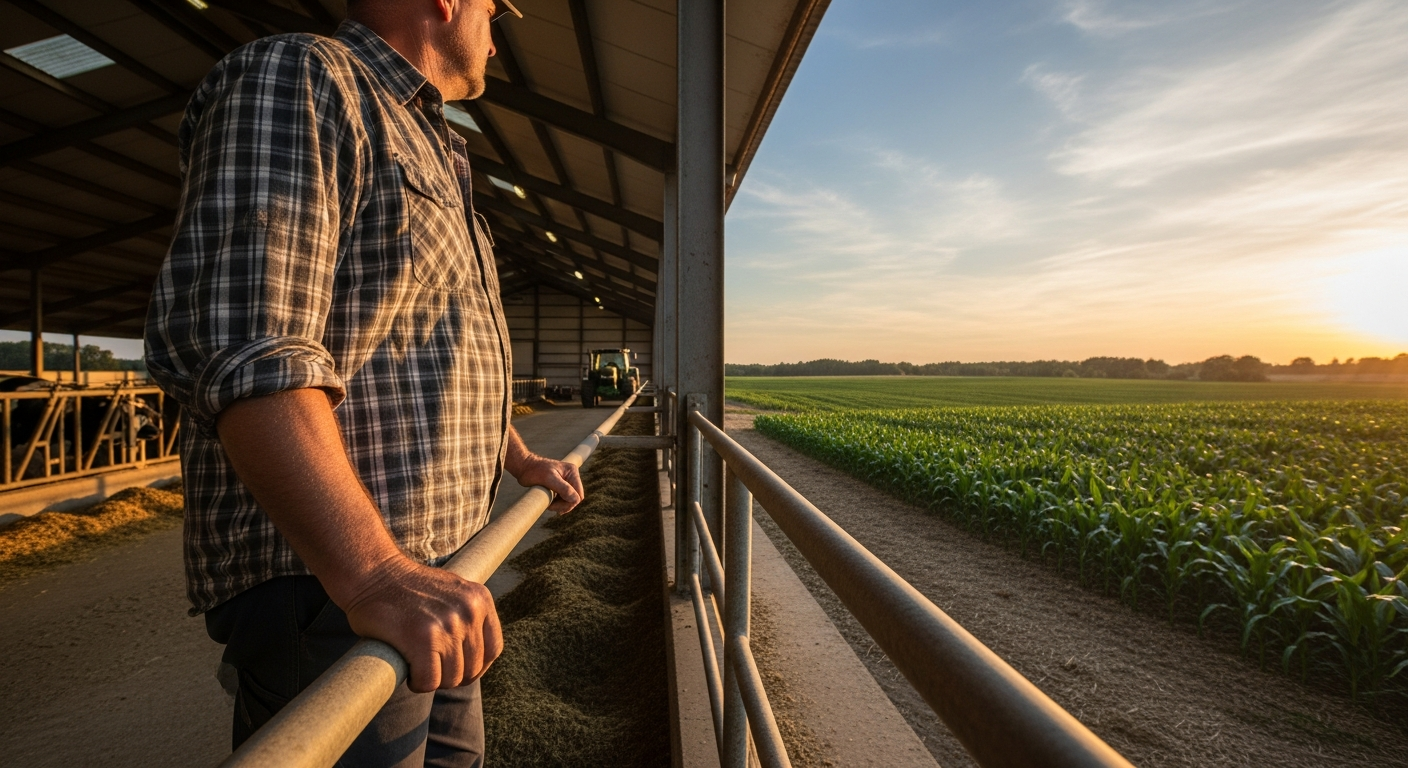
Nationally, reports highlight that efforts to create supply chain efficiency and improve yield are the focus of a booming AgriTech industry. Startups are tackling this by offering:
- Equipment Rental Models: Allowing small farmers access to expensive, specialized machinery like harvesters and planters on an affordable, pay-per-use basis, thereby boosting productivity without heavy capital expenditure.
- Digital Input Aggregation: Providing a single platform for genuine seeds, crop protection, and agri-hardware, ensuring farmers receive the right inputs at the right time.
- Precision Farming: Utilizing IoT sensors and drone imagery to optimize resource use—water, fertilizer, and pesticides—which directly translates to higher Crop Yield Improvement and reduced environmental impact.
The Madhya Pradesh government’s own Krishi Sankalp Abhiyan campaign, involving scientists visiting villages to promote the ‘lab-to-land’ transfer of knowledge, shows a strong policy signal supporting this technological push.
Why It Matters: Impact on Founders, Investors, and Mentors
For the entrepreneurial ecosystem, the focus on Farm Mechanization in Central India presents a massive, underserved market opportunity. This sector is not just about selling software; it’s about hardware, logistics, financing, and deep domain expertise—a perfect testing ground for full-stack entrepreneurs.
For Founders: The challenge is shifting from proving the technology’s worth to achieving scale and trust. Startups must navigate the fragmented nature of the farming community and the inherent skepticism towards new methods. Success hinges on creating solutions that are not just technologically advanced but also incredibly simple to use and financially accessible. The MP government’s ₹100 Crore seed capital fund signals a local appetite to back these ventures.
For Investors: AgriTech is moving past the initial hype cycle. Investors are now looking for proven unit economics, defensible technology (like the AI/Genomics work at IIT Indore), and clear pathways to scale across the state’s diverse agro-climatic zones. The focus is on B2B models that work with existing structures (like FPOs) or rental/leasing models that generate recurring revenue.
For Mentors: Mentorship needs to pivot from general tech advice to domain-specific guidance on agricultural supply chains, regulatory compliance (like BIS certification for machinery), and building trust with the end-user farmer. This is where the experience of TiE members in scaling traditional/manufacturing businesses becomes invaluable.

The NITI Aayog roadmap for frontier technology in agriculture explicitly calls for modernized mechanization, validating this sector as a national priority. This convergence of local government push, academic research (IIT Indore, ICAR Bhopal), and national policy creates a fertile ground for startups.
How Startups Can Respond: A Framework for Central India AgriTech
To capture this momentum, Central India startups must adopt a localized, efficiency-first approach. Here is a framework for action:
| Pillar | Actionable Insight for Central India | Relevant Metric/Goal |
|---|---|---|
| Access & Affordability | Focus on ‘Renting/Leasing’ models for high-value machinery (e.g., combine harvesters, specialized planters) rather than outright sales to smallholders. | Increase machinery utilization rate by 40% in target districts. |
| Data & Precision | Integrate with local institutions like Krishi Vigyan Kendras (KVKs) to validate localized ‘Package of Practices’ using sensor data. | Achieve 15% reduction in input cost (water/fertilizer) per acre. |
| Policy Leverage | Align product development with MP government subsidy schemes for farm equipment to de-risk adoption for farmers. | Ensure 75% of hardware solutions are eligible for existing state/central subsidies. |
| Trust & Adoption | Deploy field agents for on-site training and troubleshooting, embodying the ‘lab-to-land’ philosophy. | Maintain a farmer satisfaction score (CSAT) above 8/10 for tech support. |
Startups must also look beyond just the farm gate. The efficiency gains must flow through the entire chain. For instance, better harvesting via mechanization requires better post-harvest storage and logistics, an area where Indore’s growing logistics tech scene can integrate its solutions.
Local Lens: Indore, Bhopal, and the Academic Engine
Central India is uniquely positioned to lead this charge. Indore, the commercial hub, has seen the success of AgriTech players like Gramophone, which focused on input aggregation and advisory, proving the market’s readiness for tech-enabled services. The next wave must integrate the hardware and efficiency aspects they pioneered.
The academic ecosystem is already providing the core R&D. The IIT Indore AgriHub is a testament to this, focusing on genomics and precision agriculture, which will feed the next generation of DeepTech AgriTech startups. Similarly, institutions like ICAR-CIAE Bhopal are crucial partners for field testing and validating technologies before they reach the farmers in the Malwa and Nimar regions.
For entrepreneurs in the MPSEDC IT Park or Crystal IT Park, the opportunity is to build the software layer that manages the fleet of rented machinery, optimizes logistics from farm to warehouse, or develops AI models trained on local soil and weather data. This is where the TiE ecosystem, with its focus on scaling and funding, becomes critical. Founders should actively engage with programs like TiECon MP to network with investors who understand the capital-intensive nature of this sector.
As we encourage this technological adoption, let us remember the local context: “Kisan ki mehnat, technology ka saath, tabhi badhega Madhya Pradesh ka haath.” (The farmer’s hard work, with the support of technology, is how Madhya Pradesh will progress.) This synergy is the key to unlocking the state’s agricultural GDP potential.

Takeaways: The TiE Mentoring Perspective on Scaling AgriTech Hardware
From a TiE mentoring standpoint, scaling a mechanization-focused startup requires discipline across three core areas:
- Capital Efficiency in Assets: Do not buy the machinery; finance it, lease it, or partner with existing equipment owners. Your core IP is the data and the operational efficiency software, not the tractor itself.
- De-risking Adoption: Offer performance-based contracts or link payments to demonstrable yield increase. If the farmer doesn’t see a tangible ROI, the technology will remain on the shelf.
- Ecosystem Collaboration: Actively seek partnerships with the MP Agriculture Department, ICAR, and local FPOs. These bodies provide the necessary validation and last-mile connectivity that no single startup can build alone.
The journey from a pilot project in Bhopal to a state-wide deployment in Jabalpur requires mentorship that understands both the capital markets and the soil. TiE’s role is to connect the tech-savvy founders from hubs like Indore with the operational wisdom of seasoned industry leaders.
Conclusion: Cultivating a Future-Ready Heartland
The push for Farm Mechanization and efficiency is more than an economic strategy; it is a social transformation for Central India. By leveraging the technological advancements incubated in institutions like IIT Indore and supported by state policies, entrepreneurs here have a unique chance to solve one of India’s most persistent challenges. The future of agriculture in Madhya Pradesh will be defined by how effectively startups can deploy technology to increase productivity, ensuring food security and lifting millions out of agrarian uncertainty. This is the moment for Central India to move beyond being a consumer of technology to becoming a creator of world-class AgriTech solutions. The seeds of this revolution are being sown today, and they require the mentorship, networking, and funding that the TiE ecosystem is dedicated to providing.
About the Author

Amit Agrawal — Treasurer. Treasurer: Founder & COO of Cyber Infrastructure (P) Ltd. “CIS”; champion of AI-Enabled, tech-driven, global solutions and entrepreneurship; AI-First Mid-Sized Software Partner Scaling Enterprise Innovation; MIT & IIM Alum; Author: Scaling in the Age of AI; Featured in: Forbes, YourStory, TiE; Patented-Innovator; Mentor; Investor.