
The Heartland Advantage: Leveraging Tier 2 Momentum for Cost-Effective Scaling in Central India
The narrative of Indian entrepreneurship is rapidly shifting away from the saturated metros. A powerful wave of decentralization is sweeping across the nation, with Tier 2 and Tier 3 cities emerging as the new engines of innovation and growth. For Central India—encompassing dynamic hubs like Indore, Bhopal, Jabalpur, and Gwalior—this is not just a trend; it is a strategic inflection point. As national reports confirm that over 45% of recognized startups now originate outside the top metros, founders in Madhya Pradesh have a unique window to build globally competitive, yet fundamentally resilient, businesses by mastering two critical levers: local talent and cost-effective infrastructure. This shift demands a new playbook, one that TiE Indore is committed to authoring for the next generation of Central Indian unicorns.
What’s Happening: The National Decentralization Wave
The data paints a clear picture of a geographical rebalancing in India’s startup landscape. According to the Economic Survey 2024, a significant portion of India’s startup boom is now rooted in Tier 2 and Tier 3 cities, which collectively account for over 45% of all DPIIT-recognized startups Source: Business Today. This migration is fueled by a confluence of factors, including improved digital connectivity, supportive state policies, and, crucially, a significant cost advantage over established hubs like Bengaluru and Mumbai Source: Mint. A NASSCOM-Deloitte report further noted that these emerging hubs benefit from talent pool costs that are 25%–30% lower than in mature cities, alongside a 50% saving in real estate rentals Source: India Technology News. This economic reality is attracting not just startups but also Global Capability Centers (GCCs), signaling long-term institutional confidence in these secondary markets.
In Central India, this national momentum is amplified by local institutional strength. Indore, consistently ranked India’s cleanest city, is leveraging its reputation to attract both talent and investment. The ecosystem here is maturing, moving beyond initial ideation to creating scalable, value-driven enterprises. This is evident in the robust activity at premier institutions:
- IIT Indore: The IIT Indore Incubation Centre (DRISHTI CPS) has become a cornerstone for deep-tech innovation, incubating 89 startups and facilitating over ₹90 million in funding support for its graduates Source: IIT Indore. This demonstrates a direct pipeline of high-calibre, research-backed ventures.
- IIM Indore: Through its ‘Cliqué’ incubation centre, IIM Indore has nurtured successful ventures, including the payment-splitting app Contri, showcasing the strength of business acumen being developed locally Source: IIM Indore/Times of India.
This local success story is mirrored by private sector achievements. Indore-based SuperSourcing, for instance, built a national reputation by solving the very problem of tech talent acquisition, proving that world-class execution can be managed from the heartland Source: YourStory.

Why It Matters: Resilience Through Efficiency
For founders, the Tier 2 shift is a mandate for building businesses with inherent financial discipline. The era of ‘growth at any cost’ is receding, replaced by an investor focus on unit economics and sustainable profitability Source: Startup Gatha. Central India founders are uniquely positioned to excel in this environment:
- Capital Efficiency: Lower operational expenditure (OpEx) due to cheaper real estate and a competitive, yet highly skilled, local talent pool means a startup’s runway is significantly extended. Every rupee of investment goes further, allowing for more rigorous product iteration and market validation before the next funding round.
- Talent Stickiness: While metros suffer from high attrition and ‘poaching,’ Tier 2 cities often foster a stronger sense of community and loyalty. Founders can tap into the vast graduate pool from institutions across MP—not just Indore but also Bhopal and Jabalpur—and offer them opportunities closer to home, reducing relocation friction and increasing retention.
- Solving Real Problems: Startups born in Tier 2 cities are inherently closer to solving problems for the ‘Next Billion Users’—the vast, underserved consumer base outside the metros. This local market intimacy provides a competitive moat that is difficult for metro-centric companies to replicate.
Investors are taking note. The increased activity from domestic capital, family offices, and specialized funds is increasingly directed towards startups demonstrating this capital-efficient, problem-solving DNA, which is the hallmark of Central India’s emerging ecosystem.
How Startups Can Respond: The Central India Playbook
To truly capitalize on this momentum, Central Indian entrepreneurs must move from simply existing in a Tier 2 city to leveraging its specific advantages. This requires a proactive approach across talent, infrastructure, and networking.
1. Talent Acquisition: Go Deep, Not Just Wide
Don’t just hire locally; partner with the source. Founders must build deep, structural relationships with institutions like IIT Indore and IIM Indore. This goes beyond campus placements. It means co-creating projects, sponsoring hackathons, and establishing continuous feedback loops with faculty and students. For example, a startup can offer a specialized fellowship program to PhD scholars at IIT Indore to work on a specific R&D challenge, effectively gaining access to cutting-edge research at a fraction of the cost of an external R&D lab.
2. Infrastructure Utilization: Beyond the IT Park Lease
While the MPSEDC Sinhasa IT Park and Crystal IT Park offer ready-to-use space, startups should also explore non-traditional infrastructure. The lower cost of living and commercial real estate in Bhopal or Jabalpur allows for larger physical footprints for R&D or specialized manufacturing units that would be prohibitively expensive in Pune or Hyderabad. Furthermore, leveraging coworking spaces like Workie Office Spaces in Indore for flexible, low-commitment team scaling is a proven strategy for maintaining an asset-light model.
3. Funding Strategy: Patient Capital & Local Networks
Founders must seek ‘patient capital’—investors who understand the longer gestation period for deep-tech or complex B2B solutions common in the region. TiE Indore’s Angel Network and mentorship programs are crucial here, as they connect founders directly with experienced local investors who value sustainable growth over hyper-growth at any cost. The goal is to secure funding that respects the Central India timeline for scaling.
Local Lens: Indore, Bhopal, and the MP Advantage
The success stories emerging from Madhya Pradesh are tangible proof of this model working. In Indore, the focus on DeepTech at IIT Indore’s DRISHTI CPS, which has seen a remarkable 14x follow-on investment leverage for its graduated startups, shows that quality trumps quantity Source: IIT Indore. This is the kind of high-impact, technology-driven growth that the national narrative is now prioritizing.
Bhopal, too, is carving out its niche. The city’s ecosystem, often supported by local leaders and incubators, is seeing success in sectors like SaaS, with companies like Appointy demonstrating how to build a globally relevant product from the state capital Source: SaaSBoomi. The supportive environment, including government initiatives at the MPSEDC IT Park, provides a stable foundation for these ventures.
For a founder in Jabalpur or Gwalior looking to scale, the message is clear: you do not need to move to a Tier 1 city to access world-class resources. You need to actively engage with the ecosystem being built right here. As the saying goes in the local dialect, ‘Apna time aayega, bas mehnat aur sahi disha chahiye’ (Our time will come, but it requires hard work and the right direction).
Key Metrics for Central India Startup Leverage (Illustrative Benchmarks)
| Metric | Tier 1 Metro Benchmark (Est.) | Central India Tier 2 Target (Est.) | Impact on Runway |
|---|---|---|---|
| Average Monthly Office Rent (Per Seat) | ₹12,000 – ₹18,000 | ₹6,000 – ₹9,000 | ~50% Reduction |
| Entry-Level Tech Salary (YoY Growth) | 15% – 20% | 10% – 15% | Lower OpEx, Higher Retention |
| Startup Funding Success Rate (Incubated) | ~10% (Post-Graduation) | ~14x Follow-on (IIT Indore Example) | Higher Quality Pipeline |
| Time to Prototype/Validation | Longer (Due to high demand for resources) | Faster (Access to specialized labs like IIT Indore’s) | Faster Time-to-Market |
Takeaways: A Mentor’s Perspective
From a mentorship standpoint at TiE Indore, the message to founders is to internalize the cost advantage and externalize the ambition. Your operational base is your competitive shield; your market vision must be global. To achieve this, founders must:
- Formalize Academic Linkages: Treat IIM Indore, IIT Indore, and other technical colleges as your primary R&D and talent acquisition partners. Don’t wait for them to come to you; build the bridge.
- Document Efficiency: When pitching to investors, explicitly quantify your capital efficiency. Show how your lower OpEx in Indore/Bhopal translates to a longer runway or a higher burn multiple than a comparable startup in a metro.
- Engage the Ecosystem: Utilize platforms like TiE Indore’s mentorship programs to gain ‘Experience’ and ‘Expertise’ in navigating scale-up challenges specific to Tier 2 operations. The network here is dense and highly invested in your success.

Conclusion: Building a Sustainable Future
The decentralization of India’s startup ecosystem is a structural shift, not a temporary trend. Central India, with Indore leading the charge, is perfectly positioned to become a powerhouse of sustainable, value-driven technology companies. The combination of world-class academic output from institutions like IIT Indore and IIM Indore, coupled with the inherent cost benefits of operating outside the traditional metros, provides a unique formula for longevity. Founders who embrace this ‘Heartland Advantage’—by being disciplined in their spending and aggressive in leveraging local talent—will not only survive the current funding climate but will define the next decade of Indian innovation. The future of ‘Viksit Bharat’ is being coded, designed, and built right here in Madhya Pradesh. It is time for every aspiring entrepreneur to claim their stake in this exciting new frontier.
About the Author
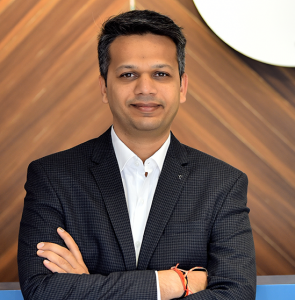
Sawan Laddha — President. Growth Specialist for Startups & MSMEs, Founder, Workie Office Spaces, 22,000+ Seats Delivered, Investor, Founding Member YPO MP, President TiE Madhya Pradesh, Building businesses by unlocking scale space & talent — building Central India’s entrepreneurial ecosystem.