
Capital Efficiency and Operational Discipline: How Central India Startups Can Master Sustainable Scale Beyond the Hype
The narrative of Indian entrepreneurship is rapidly decentralizing. While the national spotlight often remains fixed on the hyper-funded ecosystems of the metros, a quieter, more resilient revolution is taking root in the heartland. Cities like Indore, Bhopal, Jabalpur, and Gwalior are not just emerging as new startup hubs; they are pioneering a new model of growth—one where Capital Efficiency in Tier-2 Startups is not a necessity born of a funding winter, but a core philosophy. For founders in Madhya Pradesh, mastering this discipline is the key to unlocking true, sustainable scale, moving beyond the initial hype cycle. This is the blueprint for building businesses that last, leveraging local advantages to compete globally.
Why This Matters Now: The New Reality of Scale
The era of ‘growth at any cost’ is over. Even as the broader Indian ecosystem shows signs of recovery, investors are demanding a clearer path to profitability and a demonstrable return on every rupee deployed. This shift favors the Central Indian founder who inherently understands frugality. While metro startups often grapple with inflated operational costs and high talent churn, the Heartland advantage provides a natural buffer. The mandate for every founder in Indore and Bhopal today is clear: Operational Discipline must be woven into the DNA of the company, transforming lower burn rates into longer runways and greater strategic flexibility.

What’s Happening: The Data Behind the Heartland Advantage
The advantage for Central India is quantifiable, rooted in economics and ecosystem maturity. The shift isn’t just anecdotal; it’s a structural change that directly impacts a startup’s burn multiple—a key metric for Capital Efficiency in Tier-2 Startups.
Reports from the broader Indian SaaS sector indicate that many established companies maintain a Burn Multiple under 1.5x, significantly better than the global average of 2x to 3x. This efficiency is amplified in Tier-2 cities. For instance, the operational costs for setting up and running a tech center in Indore are estimated to be 30–40% lower than in Bangalore. This cost differential translates directly into a longer runway for every round of funding secured.
Furthermore, the ecosystem is producing success stories that validate this frugal approach. Appointy in Bhopal, a highly successful bootstrapped scheduling software company, proves that global-quality products can be built and scaled without heavy dilution, relying on local talent and operational prudence. Similarly, Indore-based giants like ShopKirana have built massive platforms by focusing on the core economics of the underserved retail market, demonstrating Sustainable Scale through deep market understanding rather than just high burn rates.
Key Metrics for Capital Efficient Growth
To translate lower costs into superior performance, Central India founders must obsess over these KPIs:
| Metric | Definition | Target for Sustainable Scale |
|---|---|---|
| Burn Multiple | Net Burn / Net New ARR (How much cash is burned to generate new revenue) | |
| CAC Payback Period | Time taken to recoup the Customer Acquisition Cost (CAC) from gross profit | |
| Cash Runway | Months a company can operate before running out of cash | > 18 Months (Leveraging lower burn for longer survival) |
Why It Matters: Impact on Founders, Investors, and Mentors
This focus on efficiency fundamentally changes the relationship between founders, capital, and mentorship in Central India.
For Founders: Capital efficiency buys time. Time to achieve true Product-Market Fit (PMF) without the pressure of an immediate Series A. It fosters a culture of frugal innovation—the ability to solve big problems with limited resources, a hallmark of successful Indian companies like Zoho. Founders can focus on building a resilient business model that serves local needs (like Agritech or localized SaaS) while keeping an eye on global potential.
For Investors: Investors are increasingly looking for startups that have proven they can operate leanly. A low burn rate signals management maturity and reduces investor risk. For Angel investors in the TiE Indore Angel Invest network, backing a capital-efficient startup means their capital goes further, potentially leading to better valuation multiples in subsequent rounds.
For Mentors: Mentoring shifts from ‘how to spend money’ to ‘how to generate revenue faster.’ Mentors can guide founders on optimizing Customer Acquisition Cost (CAC) and improving Net Dollar Retention Rate (NDRR), which are critical for demonstrating strong unit economics. This is where the TiE Mentoring pillar shines brightest—providing practical, experience-based guidance on financial prudence.
How Startups Can Respond: Actionable Insights for Sustainable Scale
Central India founders must actively pursue strategies that maximize their inherent cost advantage. This is about being proactive, not reactive.
- Master Unit Economics First: Before chasing scale, ensure your core transaction is profitable. For a SaaS company in Bhopal, this means rigorously testing pricing models and ensuring the Lifetime Value (LTV) to CAC ratio is at least 3:1. For an AgriTech firm in Indore, it means optimizing the supply chain to reduce post-harvest loss, directly impacting margin.
- Embrace Talent Retention over Churn Reduction: While metro cities see attrition rates of 18-22%, Indore’s workforce often shows 20–30% lower attrition. Founders must leverage this stability by investing heavily in local talent development through partnerships with institutions like IIM Indore and IIT Indore. Lower churn drastically reduces the recurring cost of hiring and training, boosting capital efficiency.
- Leverage Local Infrastructure: Utilize the cost benefits of operating outside Tier-1 cities. The MPSEDC IT Park and Crystal IT Park in Indore offer competitive leasing rates compared to their counterparts in Bangalore. This lower overhead directly extends the cash runway, allowing for more R&D or market penetration efforts before the next funding milestone.
- Adopt a ‘Bootstrapper’ Mindset: Even if taking external capital, operate as if you are bootstrapped. This means prioritizing revenue generation from day one. The success of companies like Appointy shows that a focus on customer revenue over investor capital builds a stronger foundation.
- Strategic Outsourcing and Partnerships: Focus internal capital on core IP development. For non-core functions like large-scale data processing or non-critical compliance, leverage local, cost-effective service providers, many of whom are now scaling up in cities like Gwalior and Jabalpur.
The Local Lens: Indore, Bhopal, and the MP Ecosystem in Action
The principles of capital efficiency are already being proven on the ground in Madhya Pradesh. The state’s entrepreneurial spirit is not about vanity metrics; it’s about building real businesses.
Consider the manufacturing sector, where startups like EcoPack Industries (Indore) have grown into exporters by embedding sustainability and cost-effectiveness into their product design. This is capital efficiency in the physical world. In the tech space, the growth of companies like micromitti (PROPTECH), which has seen significant investment, is underpinned by solving real estate challenges in a cost-conscious market, showing that even high-tech ventures benefit from a grounded approach.
TiE Indore MP is actively fostering this culture. Our flagship event, TiECon MP, is designed not just to attract capital, but to educate founders on how to deploy it wisely, connecting them with mentors who have navigated the journey from scrappy startup to scale. We encourage every founder to engage with the ecosystem through programs like TiE Women MP and our mentorship initiatives to internalize this discipline.
As one leader noted in a discussion on scaling, adaptability and resilience are key, but they must be paired with a focus on what gives you scale—often, it’s a model that educates the customer and maximizes asset utilization. For Central India, that asset is its lower cost base and stable talent pool.
As we say in the heartland, ‘Thodi mehnat, zyada asar’ (A little effort yields a greater impact)—this is the essence of capital efficiency.
Takeaways: A TiE Mentoring Perspective and Practical Actions
From a TiE mentoring standpoint, the path to Sustainable Scale for Central India startups is paved with financial prudence. Don’t confuse fundraising with success; view funding as fuel for a well-tuned engine.
Practical Actions for Founders:
- Audit Your Burn: Conduct a zero-based budgeting exercise for the next 12 months. Categorize every expense as ‘Essential for Core IP/Product,’ ‘Essential for Revenue Generation,’ or ‘Nice to Have.’ Cut the latter immediately.
- Benchmark Against Peers: Don’t just compare your revenue to a Bangalore startup; compare your Burn Multiple and CAC Payback Period. Use the data from national reports and local TiE networks to set realistic, efficient targets.
- Build for Profitability: Even if you are pre-revenue, map out the exact point where you become cash-flow positive. Work backward from that date, not from the date you hope to raise your next round.
Engage with the ecosystem. Attend events like TiECon MP to learn from those who have mastered this balance. Seek out mentors who have successfully scaled businesses with limited capital. This is how you transform the inherent cost advantage of Indore and Bhopal into a competitive moat.
Conclusion: The Heartland’s Moment is Now
The global startup landscape is maturing, and the focus is shifting from sheer valuation to enduring value creation. Central India, with its lower operational friction and a growing pool of committed talent, is perfectly positioned to lead this next phase. By embedding Capital Efficiency in Tier-2 Startups as a non-negotiable principle, founders in Indore, Bhopal, and beyond are not just surviving the funding cycle—they are defining a more robust, resilient, and ultimately more valuable future for Indian entrepreneurship. The time for dreaming big, but building smart, is now. Embrace the discipline, leverage your local advantages, and build a legacy that lasts.
About the Author
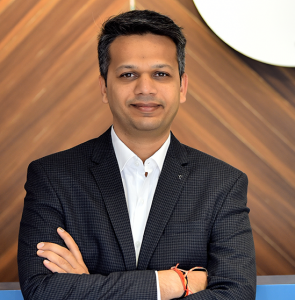
Sawan Laddha — President. Growth Specialist for Startups & MSMEs, Founder, Workie Office Spaces, 22,000+ Seats Delivered, Investor, Founding Member YPO MP, President TiE Madhya Pradesh, Building businesses by unlocking scale space & talent — building Central India’s entrepreneurial ecosystem.