
The Digital Furrow: How AI in Central India Agritech is Cultivating the Next Billion-Dollar Harvest
The soil of Madhya Pradesh—the heartland of India—has always been rich in potential, yielding bumper crops of wheat, soybean, and pulses. Today, a new kind of seed is being sown across this fertile ground: data, driven by Artificial Intelligence. For entrepreneurs in Indore, Bhopal, Jabalpur, and Gwalior, the convergence of India’s massive agricultural base with the global AI revolution presents an unparalleled opportunity. The future of farming isn’t just about better seeds or weather forecasts; it’s about building an ecosystem where AI in Central India Agritech becomes the primary tool for sustainability, efficiency, and exponential founder growth. This is the moment for Central India’s tech talent to move beyond consumer apps and engineer the next green revolution, one precise data point at a time.
What’s Happening: The National and Local Tech Infusion
The national narrative around Indian startups is shifting towards deep-tech and foundational technology, and AgriTech is at the forefront of this transformation. Globally, the AI in agriculture market is projected to grow from USD 1.7 billion in 2023 to USD 4.7 billion by 2028, exhibiting a remarkable Compound Annual Growth Rate (CAGR) of 23.1% . India is not just a participant; it is a critical testbed for these innovations, given the sheer scale and complexity of its agrarian economy.
The Government of India has recognized this imperative, announcing plans to invest INR 6,000 crore in smart precision farming from FY 2024–25 to 2028–29 . This massive capital infusion, coupled with existing schemes like the ‘Per Drop More Crop’ (PDMC) initiative, is creating a strong tailwind for startups focusing on data-driven resource optimization .
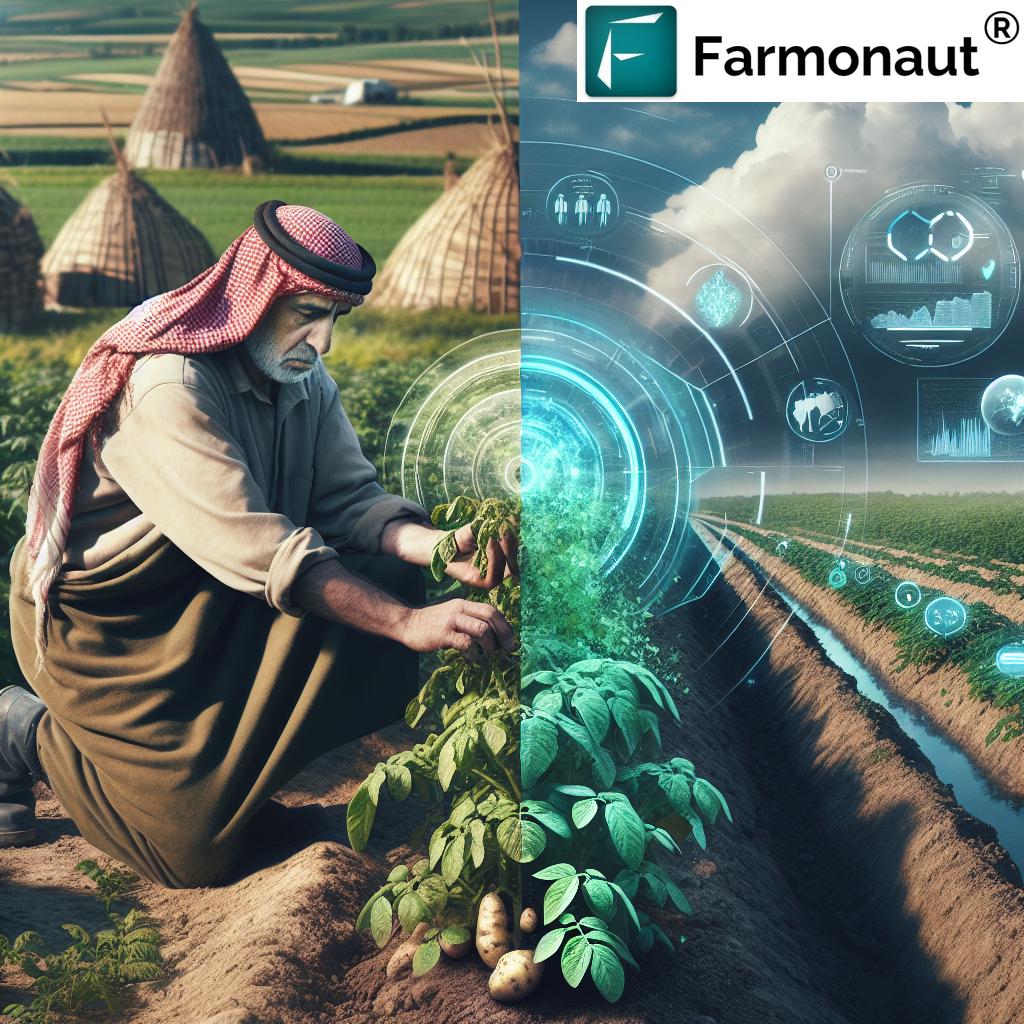
However, the data also reveals a significant challenge that Central India startups are perfectly positioned to solve. An ASSOCHAM report highlighted that a staggering 86% of Indian farmers remain beyond the reach of current agri-tech innovations . This gap is often due to fragmented validation processes and a lack of hyper-local, accessible solutions . This is where the entrepreneurial spirit thriving in Tier-2 cities like Indore and Bhopal, which are increasingly becoming tech hubs , becomes crucial. The focus must shift from building generalized tech to creating inclusive, affordable, and context-specific tools for the small and marginal farmers that form the backbone of Madhya Pradesh’s economy.
Why It Matters: For Founders, Investors, and Mentors
This trend is a direct call to action for the entire TiE ecosystem, aligning perfectly with our pillars of Mentoring, Education, and Funding.
- For Founders: The opportunity is in solving the ‘last-mile’ problem. Founders must focus on accessibility—delivering insights via vernacular languages, WhatsApp, or simple voice commands, rather than complex dashboards. The focus on Smart Agriculture Madhya Pradesh means tailoring solutions for soil types, crop cycles, and local weather patterns unique to the Malwa and Bundelkhand regions.
- For Investors: The market is maturing beyond simple e-commerce for inputs. Investors are now looking for scalable, sustainable models that demonstrate clear ROI for the farmer, often through subscription or pay-per-use models for high-cost assets like drones or sensors. The MP Startup Policy, with its ₹100 Crore Startup Capital Fund and seed assistance up to ₹30 lakh, provides a strong initial anchor for local ventures .
- For Mentors: Mentorship must pivot from general business advice to domain-specific expertise in AgriTech stacks—integrating IoT, geospatial data, and ML models. Mentors with experience in scaling MSMEs or deep-tech are invaluable in helping these startups navigate the long gestation periods and build farmer trust .
How Startups Can Respond: The Precision Playbook
To capture this market and bridge the inclusion gap, Central India AgriTech startups should adopt a structured approach. This is the Precision Playbook for Central India AgriTech:
- Hyper-Local Data Acquisition: Move beyond district-level data. Invest in low-cost, robust IoT sensors and partner with local Krishi Vigyan Kendras (KVKs) to gather field-level data on soil moisture, nutrient levels, and micro-climates.
- Vernacular & Voice-First Advisory: Adopt AI chatbots like the national ‘Jugalbandi’ or ‘Kisan e-Mitra’ models, but localized for Marathi/Hindi/Malvi dialects, delivering advice via voice or simple text on platforms farmers already use, like WhatsApp .
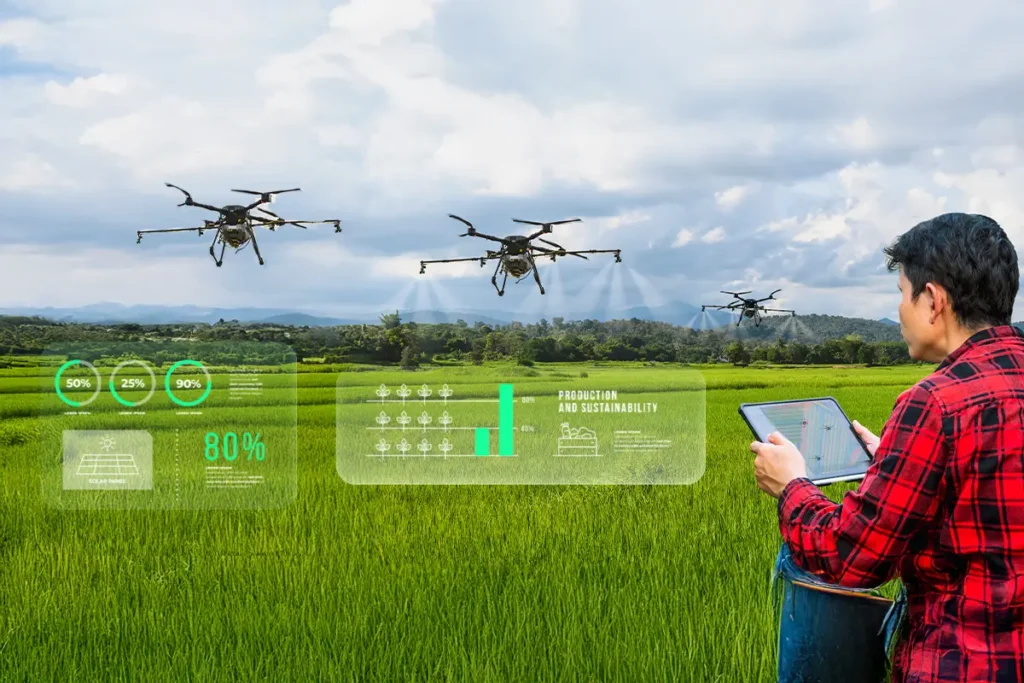
- Asset-as-a-Service (AaaS): For expensive hardware like AI-powered drones for spraying or multispectral imaging, offer AaaS models. This lowers the entry barrier for farmers, allowing them to pay per acre for services rather than capital expenditure .
- Focus on Input Optimization & Climate Resilience: Target the core pain points: water scarcity and input costs. AI that can reduce water usage by 50% or precisely target fertilizer application offers immediate, measurable savings, which builds farmer trust faster than yield prediction alone .
Local Lens: Indore, Bhopal, and the MP Advantage
Central India is not just a beneficiary; it is a natural incubator for this revolution. Indore, with its Super Corridor parks and a steady supply of 20,000 STEM graduates annually, provides the necessary tech talent pool . Bhopal, as the state capital, offers proximity to policy-makers and agricultural research centers.
Founders in the region must actively engage with local institutions. Partnerships with IIM Indore for market strategy, IIT Indore for deep-tech R&D, and leveraging the infrastructure at MPSEDC IT Park for pilot projects are non-negotiable. For instance, a startup focusing on soybean crop health could pilot its AI models in the Malwa region, using the state’s own data and policy support to validate its solution before scaling nationally.
The TiE Indore ecosystem is already fostering this cross-sectoral growth. Programs like TiE Con MP serve as vital platforms for AgriTech founders to network with investors who understand the capital-intensive nature of hardware/IoT solutions and mentors who can guide them through the complexities of farmer adoption. This local support network is the competitive edge against the national fragmentation noted by ASSOCHAM .
Takeaways: The Mentor’s Perspective on Scale
From a mentorship standpoint, the path to success in AI in Central India Agritech is paved with trust and tangible results. Here are the key takeaways:
Key Metrics for AgriTech Success in Central India
| Metric Category | Benchmark/Target | Relevance |
|---|---|---|
| Market CAGR (India) | 23.1% (AI in Agri) | Indicates high growth potential. |
| Farmer Inclusion Gap | 86% Untouched | The primary market opportunity for accessible tech. |
| Govt. Precision Farming Fund | INR 6,000 Crore (FY25-29) | Capital available for startups aligning with national goals. |
| MP Seed Fund Grant | Up to ₹30 Lakh via Incubators | Local funding source for early-stage validation. |
Practical Action: Founders must seek mentorship on building a ‘Trust Stack’ alongside their Tech Stack. This involves securing early validation from Farmer Producer Organizations (FPOs) and demonstrating success stories in local districts like Sehore or Ujjain before approaching larger institutional investors. The goal is to translate the promise of Precision Farming MP into verified, on-ground success that can be replicated across the state’s diverse agro-climatic zones.
Conclusion: Sowing the Seeds of a Digital Future
The global technology wave is no longer just about software; it is about applying intelligence to the physical world—from the factory floor to the farm field. For Central India, the synergy between its agricultural dominance and the burgeoning AI ecosystem is a unique competitive advantage. The challenge of reaching the 86% of underserved farmers is not a barrier; it is the market opportunity waiting to be unlocked by empathetic, locally-grounded innovation. As you plan your next venture, remember that the most valuable harvest is not just in the yield, but in the resilience and prosperity you build for the millions who feed the nation. Connect with the ecosystem, leverage the mentorship available at TiE Indore, and start building the technology that will define Tier-2 Tech Growth for the next decade. The time to digitize the furrow is now.
About the Author

Jay Jain — Past-President. Investor, mentor & Co-founder of Astute Group; focus on early-stage funding and startup governance; Ex President and Board Member TiE; Angel Investor; Mentor; Founder’s Coach; Building Multiple Start-ups from Ideation to Exit for Business Family Houses; Auhor: “Magic of AI in 6 letters & a GSheet!”.