- April 21, 2026
- Blog & Newsletters
- Comments : 0
AI-Powered Product Innovation: Revolutionizing Manufacturing in Central India
The manufacturing sector in Central India, particularly in Madhya Pradesh, is on the cusp of a profound transformation, driven by the rapid integration of Artificial Intelligence (AI) into product development and innovation. As the nation pushes towards becoming a global manufacturing powerhouse, cities like Indore and Bhopal are emerging as dynamic hubs where cutting-edge AI technologies are not just enhancing operational efficiencies but fundamentally reshaping how products are conceived, designed, and brought to market. This AI-driven revolution promises to unlock unprecedented levels of competitiveness, speed, and customization for local industries, empowering them to thrive in an increasingly digital and demanding global landscape.
The strategic adoption of AI in product development is no longer a distant aspiration but a present-day necessity for manufacturers aiming to stay ahead. From accelerating design cycles and reducing prototyping costs to improving product performance and sustainability, AI offers a suite of capabilities that can redefine the entire product lifecycle. For Central India’s burgeoning startup ecosystem and established MSMEs, understanding and leveraging these AI-driven advancements is key to navigating future growth and contributing significantly to the region’s economic resurgence.
What’s Happening: The AI Surge in Indian Manufacturing
India’s manufacturing sector is experiencing a significant AI-driven evolution. Data indicates a strong upward trend in AI adoption, with projections suggesting that 73% of Indian manufacturers plan to integrate AI by 2025 [7]. This surge is supported by substantial private investment and strong government backing, with the domestic AI-in-manufacturing market expected to reach ₹12.59 billion by 2028, growing at a remarkable CAGR of 58.96% [7]. While MSMEs have historically lagged in adoption, a growing awareness of AI’s potential is evident, with 94% recognizing its ability to drive business growth [57].
The application of AI in product development is particularly noteworthy. Generative AI is already accelerating design and prototyping processes by up to 35% for large manufacturers [4], enabling faster iteration and exploration of novel concepts. AI-assisted product design tools can significantly lower development costs, enhance product performance, and even contribute to sustainability by optimizing material usage and reducing waste [6, 32]. This capability is crucial for startups and MSMEs, allowing them to compete with larger enterprises by developing sophisticated, data-driven products more efficiently and cost-effectively [56, 71].
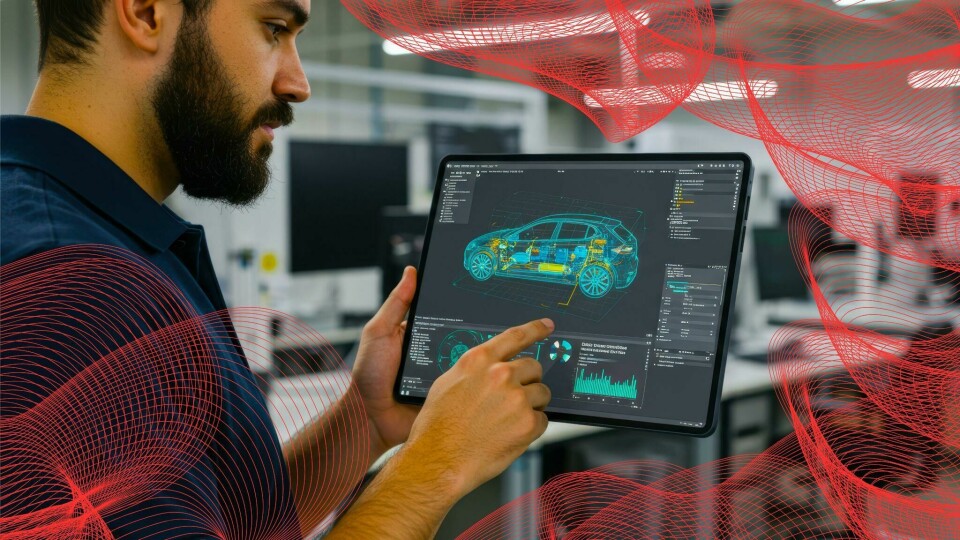
The Indian manufacturing sector is rapidly integrating AI, with a projected market size of $3,750.9 million by 2030, growing at a CAGR of 54.7% from 2025 to 2030 [63]. This growth is fueled by initiatives like ‘Make in India’ and ‘Startup India’, encouraging companies to embed AI into their operations for enhanced productivity, efficiency, and flexibility [94]. The focus is shifting from mere automation to intelligent systems that learn, optimize, and deliver at scale, making AI a strategic lever for global competitiveness [60].
Why It Matters: Impact on Founders, Investors, and Mentors
The integration of AI into product development and manufacturing offers a paradigm shift with profound implications for the entire entrepreneurial ecosystem. For founders, AI-powered product innovation translates directly into a significant competitive advantage. The ability to rapidly iterate designs, simulate performance, and predict potential flaws before physical prototyping dramatically reduces time-to-market and development costs [71]. This speed and precision allow startups to bring more refined, customer-centric products to market faster, a critical factor in gaining market share and attracting early traction. Furthermore, AI enables the creation of highly personalized and adaptive products, catering to evolving consumer demands and opening new avenues for market differentiation.
Investors are increasingly looking for startups that leverage advanced technologies like AI to build scalable and defensible businesses. Companies demonstrating a clear AI strategy in their product development pipeline are seen as more resilient and capable of achieving higher returns on investment. AI-driven efficiency and innovation can lead to better profit margins and a stronger market position, making them attractive prospects for venture capital. Mentors, in turn, play a crucial role in guiding founders through this complex landscape. They can provide strategic advice on identifying the right AI applications for specific product challenges, navigating the ethical considerations of AI deployment, and building the necessary technical expertise or partnerships to successfully integrate AI into their product roadmaps.
How Startups Can Respond: Actionable Insights for Central India
For startups and MSMEs in Central India, embracing AI in product development requires a strategic, phased approach. The first step is to identify specific pain points within the product lifecycle where AI can offer the most significant impact. This could range from using generative AI tools to explore a wider array of design possibilities [4, 60] to employing AI-driven simulations for rapid testing and validation [31, 32]. For instance, a textile startup in Indore could leverage AI-powered visual inspection systems to ensure consistent quality in fabric production, or an automotive component manufacturer in Pithampur could use AI to optimize designs for weight reduction and material efficiency [4, 6].
Startups should also focus on building robust data strategies. AI models thrive on data, so collecting, cleaning, and annotating relevant data from design, manufacturing, and customer feedback is paramount [85]. Leveraging affordable cloud-based AI solutions and no-code/low-code platforms can significantly lower the barrier to entry, allowing businesses to experiment with AI prototyping without substantial upfront investment [56, 64, 78]. Furthermore, tapping into the supportive ecosystem provided by government policies like the MP Startup Policy and initiatives from organizations like TiE Indore can provide access to funding, mentorship, and crucial technical expertise [18, 21, 27, 90].
Local Lens: Indore, Bhopal, and the Heartland’s AI Advantage
Central India, particularly Madhya Pradesh, is actively fostering an environment conducive to AI-driven manufacturing innovation. Cities like Indore and Bhopal, historically known for their industrial prowess in sectors such as textiles, pharmaceuticals, and auto components [3, 12, 13], are now embracing AI as a catalyst for future growth. The state government’s commitment is evident through initiatives like the ‘AI Mission’ aimed at transforming governance and fostering a robust AI ecosystem [23, 34, 41, 43, 80, 95]. This includes establishing AI accelerators in Bhopal and Indore and promoting AI startups and MSMEs [76].
Institutions like IIT Indore and IIM Indore are crucial in developing the skilled talent pool necessary for AI integration [18]. Local startups are already making strides; for example, Robro Systems in Indore develops AI-powered web inspection systems for textiles, enhancing quality control [91]. Fusion Informatics, an AI company based in Indore, offers end-to-end AI solutions for various industries [48]. These local examples demonstrate that the AI revolution in manufacturing is not just a national trend but a tangible reality taking root in Central India, offering a unique opportunity for regional businesses to innovate and scale.

The MP Startup Policy and Implementation Scheme 2022, along with other state-level incentives, provides financial support and a comprehensive framework for startups, directly addressing the challenges of AI adoption [21, 27, 90]. This supportive policy landscape, combined with the availability of skilled talent and a growing number of AI-focused startups, positions Central India as a fertile ground for AI-driven product innovation in manufacturing. The spirit of ‘Make in India’ is being amplified by ‘Innovate with AI in India,’ creating a powerful synergy for regional economic growth.
Takeaways: A TiE Mentoring Perspective
From a TiE Indore mentoring standpoint, the journey of integrating AI into product development for Central India’s manufacturing sector can be distilled into a few key principles. Firstly, strategic adoption over blind implementation is crucial. Founders must clearly define the business problem AI is intended to solve, rather than adopting AI for its own sake. Mentors can guide entrepreneurs in identifying high-impact use cases, such as predictive maintenance for machinery, AI-assisted design optimization, or intelligent quality control systems.
Secondly, leveraging the ecosystem is paramount. TiE Indore, along with other incubators and government bodies, offers invaluable resources. This includes access to mentorship from experienced professionals who have navigated similar technological shifts, networking opportunities to connect with AI experts and potential partners, and guidance on securing funding specifically for AI-intensive product development. The focus should be on building a sustainable AI strategy that aligns with market needs and business objectives, ensuring that AI becomes a true enabler of growth and not just a technological experiment.
Finally, continuous learning and adaptation are non-negotiable. The AI landscape is evolving at an unprecedented pace. Founders must foster a culture of continuous learning within their teams, encouraging upskilling in AI-related areas and staying abreast of the latest tools and best practices. Practical actions include exploring AI prototyping tools to quickly validate ideas [64, 78], focusing on data quality and management, and building agile product development processes that can incorporate AI-driven insights iteratively.
Conclusion: Forging a Smarter Future
The integration of AI into product development and manufacturing is not merely an upgrade; it is a fundamental redefinition of how industries operate, innovate, and compete. For Central India, this presents a unique opportunity to leapfrog traditional challenges and establish itself as a leader in AI-driven manufacturing. By embracing AI, local businesses can enhance their product quality, accelerate innovation cycles, reduce costs, and create more sustainable and customer-centric offerings.
The path forward requires a concerted effort from entrepreneurs, policymakers, educational institutions, and the mentoring community. As AI continues to evolve, its potential to drive economic prosperity and technological advancement in regions like Madhya Pradesh is immense. By fostering a culture of innovation, investing in talent, and strategically adopting AI solutions, Central India can indeed forge a smarter, more competitive, and prosperous future for its manufacturing sector and beyond. The time to innovate with AI is now – let’s build the future, together!
About the Author

Amit Agrawal — Treasurer. Treasurer: Founder & COO of Cyber Infrastructure (P) Ltd. “CIS”; champion of AI-Enabled, tech-driven, global solutions and entrepreneurship; AI-First Mid-Sized Software Partner Scaling Enterprise Innovation; MIT & IIM Alum; Author: Scaling in the Age of AI; Featured in: Forbes, YourStory, TiE; Patented-Innovator; Mentor; Investor.