- April 17, 2026
- Blog & Newsletters
- Comments : 0
AI-Driven Supply Chain Optimization: Empowering Central India’s Manufacturing MSMEs for Growth
AI-Driven Supply Chain Optimization: Empowering Central India’s Manufacturing MSMEs for Growth
By Nilesh Maheshwari
The heartbeat of India’s economy pulses through its Micro, Small, and Medium Enterprises (MSMEs), particularly those in the manufacturing sector. These enterprises are not just job creators; they are the engines of innovation and the backbone of industrial output. However, in today’s hyper-competitive and increasingly volatile global market, traditional operational models are proving insufficient. Supply chains, once considered a mere operational necessity, have become a strategic battleground. For manufacturing MSMEs in Central India, embracing advanced technologies like Artificial Intelligence (AI) for supply chain optimization is no longer a luxury but a critical imperative for survival and growth. This article delves into how AI can transform supply chains, offering actionable insights for businesses in Indore, Bhopal, and across Madhya Pradesh.
The Evolving Landscape of Manufacturing Supply Chains
The manufacturing sector in India is a cornerstone of its economic aspirations, aiming to significantly contribute to the nation’s GDP. However, MSMEs within this sector often grapple with a myriad of challenges, including infrastructure bottlenecks, limited access to technology, and intense competition. The global supply chain has become increasingly complex, marked by disruptions, fluctuating demand, and rising logistical costs. Traditional methods of inventory management, demand forecasting, and route planning are struggling to keep pace. This is where Artificial Intelligence emerges as a transformative force. AI-powered solutions offer the potential to bring unprecedented levels of efficiency, visibility, and resilience to supply chains, enabling MSMEs to not only overcome their current hurdles but also to gain a significant competitive edge.
What’s Happening: AI’s Ascendancy in Indian Supply Chains
The integration of AI into supply chain management is not a distant future; it’s a present reality rapidly reshaping industries across India. The India Artificial Intelligence in Supply Chain Market is projected to grow at a remarkable CAGR of 37.80% by 2032, with market size expected to surpass USD 3 billion by 2030 [4]. This growth is fueled by several key drivers. The booming e-commerce sector, for instance, necessitates faster, more efficient, and transparent logistics, pushing companies to adopt AI for demand forecasting and last-mile delivery optimization [4]. Furthermore, government initiatives like ‘Digital India’ and the National Logistics Policy are accelerating the adoption of digital technologies, creating a fertile ground for AI-driven solutions [4].
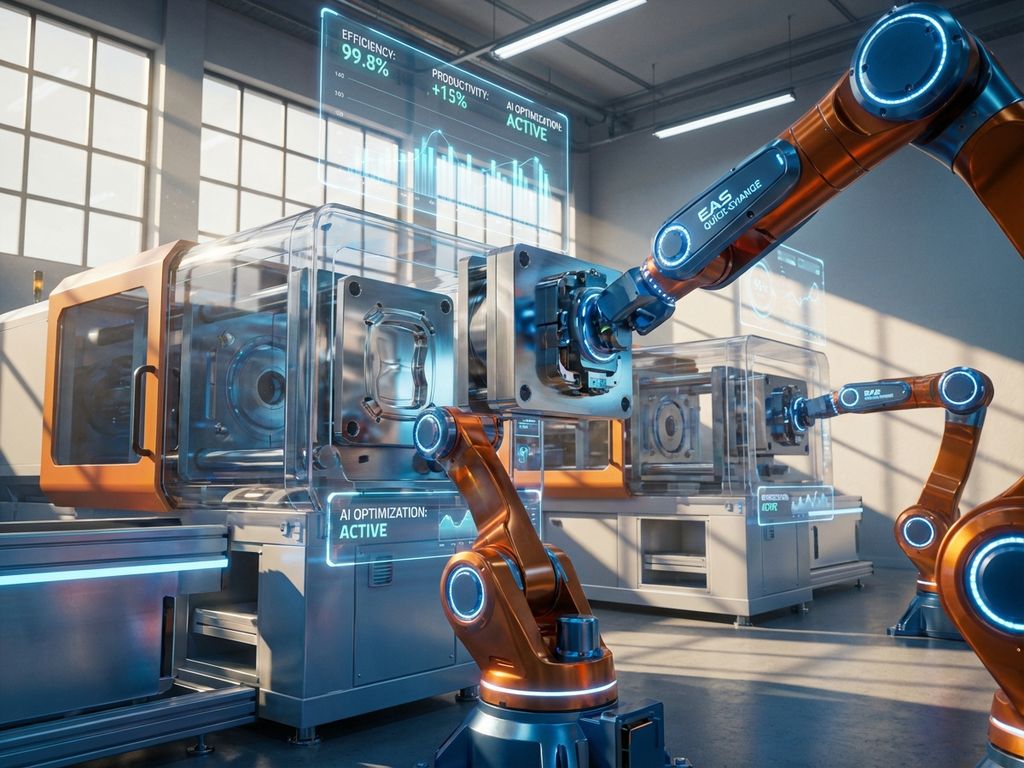
AI’s impact is tangible. It can improve demand forecasting accuracy by up to 50% and reduce logistics costs by nearly 15% [4]. Machine learning algorithms are becoming central to real-time tracking, predictive analytics for potential delays, and optimizing inventory management to prevent stockouts or overstocks [5]. In manufacturing specifically, AI is moving beyond simple automation to enable smart factories, predictive maintenance, and enhanced quality control [18, 30]. The Indian manufacturing sector, which aims to contribute 25% to the national GDP, sees AI as a critical enabler for this ambitious goal [35]. While AI adoption in Indian manufacturing has seen a steady increase, with projections indicating 73% of manufacturers planning to adopt AI by 2025, MSMEs still face a gap, often due to perceived costs and skill shortages [24, 25, 31].
Why It Matters: The Strategic Advantage for Central Indian Manufacturers
For manufacturing MSMEs in Central India, particularly in industrial hubs like Indore and Bhopal, optimizing supply chains with AI offers a strategic advantage that can redefine their market position. The challenges faced by these enterprises are significant: limited access to finance, infrastructure deficits, and low technology adoption are persistent issues [7, 11, 16]. AI-driven supply chain management directly addresses many of these pain points.
Firstly, AI enhances operational efficiency. By analyzing vast datasets, AI can optimize inventory levels, reduce warehousing costs, and streamline logistics. This leads to significant cost savings, a critical factor for MSMEs operating on thin margins. For example, AI-powered route optimization can reduce fuel consumption and operational costs, while intelligent inventory systems minimize waste and prevent stockouts [5]. Secondly, AI provides unprecedented visibility and predictability. Real-time tracking of goods, predictive analytics for demand fluctuations, and early detection of potential disruptions allow businesses to respond proactively rather than reactively [5, 8]. This resilience is invaluable in navigating the uncertainties of the modern market.
Thirdly, AI can democratize advanced capabilities. What was once exclusive to large corporations is now accessible to smaller players through cloud-based AI solutions and pay-as-you-go models [25]. This levels the playing field, allowing Central Indian MSMEs to compete with larger national and international players. The Madhya Pradesh government’s commitment to fostering AI adoption through policies and infrastructure development further supports this [14, 25, 26]. By leveraging AI, manufacturers can improve customer satisfaction through faster, more reliable deliveries and better product availability, ultimately building stronger brand loyalty.
How Central Indian MSMEs Can Respond: A Practical Roadmap
Embracing AI for supply chain optimization might seem daunting, but a phased, strategic approach can make it achievable for manufacturing MSMEs in Central India. The key is to start with clear objectives and leverage available resources.
- Assess Current Operations and Identify Pain Points: Before implementing any technology, it’s crucial to understand your existing supply chain. Where are the biggest inefficiencies? What are the primary bottlenecks? Is it inventory management, transportation, demand forecasting, or supplier coordination? Focusing on one or two critical areas where AI can provide the most immediate impact is a wise first step.
- Educate and Upskill Your Workforce: AI implementation requires a knowledgeable team. Invest in training programs to upskill existing employees or hire individuals with relevant AI and data analytics skills. Initiatives like the NASSCOM AI Pathshala or government-backed training programs can be invaluable [29]. The goal is to build a team that can not only operate AI tools but also interpret the data and insights they provide.
- Start Small with Pilot Projects: Instead of a complete overhaul, begin with pilot projects. For instance, implement an AI-powered demand forecasting tool for a specific product line or use AI for optimizing delivery routes in a particular region. Success in these smaller projects builds confidence and provides valuable learnings for broader implementation.
- Leverage Cloud-Based AI Solutions: Many AI tools are now available as Software-as-a-Service (SaaS) solutions, accessible via the cloud. These platforms often require lower upfront investment and offer scalability. Companies like those supported by MPSEDC IT Park can explore these readily available solutions [25].
- Focus on Data Quality and Integration: AI thrives on data. Ensure your data collection processes are robust and that data is accurate, consistent, and accessible. Integrating data from various sources—ERP systems, IoT sensors, sales records—is crucial for AI algorithms to provide comprehensive insights [23, 30].
- Seek Mentorship and Collaboration: Organizations like TiE Indore MP are vital resources for entrepreneurs. Engaging with mentors who have experience in technology adoption and supply chain management can provide invaluable guidance. Collaborating with local institutions like IIM Indore or IIT Indore for research or talent can also be beneficial [7, 22].
Local Lens: Indore, Bhopal, and the MP Advantage
Madhya Pradesh is actively positioning itself as a hub for technological advancement and entrepreneurship. The state government’s commitment to AI is evident through initiatives like the State AI Mission and the establishment of an AI Governance Sandbox [14, 26]. The MP Startup Policy and Implementation Scheme 2022 provides tangible benefits, directly addressing the challenges of AI adoption for MSMEs [25]. Cities like Indore, known for its strong manufacturing base and emerging startup ecosystem [13, 19, 21, 22], and Bhopal, are becoming fertile grounds for tech-driven businesses. Institutions like IIM Indore and IIT Indore are nurturing talent and fostering research, creating a skilled workforce pool [22].
Manufacturing MSMEs in these regions can explore AI solutions for various aspects of their supply chain. For example, textile traders in Indore’s Siyaganj Market can use AI for GST-compliant billing in Hindi, demonstrating localized AI application [20]. Grocery distributors in Bhopal can leverage AI dashboards for sales forecasting and inventory optimization [20]. The MPSEDC IT Park provides infrastructure and support for technology-driven enterprises [25]. By tapping into these local resources and government support, Central Indian MSMEs can build resilient, AI-powered supply chains. Apne vyavsay ko AI se mazboot banao (Make your business strong with AI).
Takeaways: A TiE Mentoring Perspective
From a TiE mentoring perspective, the adoption of AI in supply chains for manufacturing MSMEs is about strategic foresight and pragmatic execution. Mentors often emphasize starting with a clear problem statement and aligning technology adoption with business goals. The journey isn’t just about implementing software; it’s about fostering a data-driven culture and building internal capabilities. We encourage entrepreneurs to view AI not as a cost center, but as an investment in future-proofing their operations. Leveraging the TiE network for peer learning, accessing experienced mentors, and understanding best practices from successful startups can significantly de-risk this transition. Remember, the goal is not just to adopt AI, but to adopt it intelligently, ensuring it drives measurable improvements in efficiency, cost, and customer satisfaction.
Conclusion: Building Resilient Futures
The integration of AI into supply chain management is a paradigm shift that promises to redefine competitiveness for manufacturing MSMEs. For businesses in Central India, this presents a unique opportunity to leapfrog traditional challenges and build robust, agile, and efficient operations. By understanding the trends, identifying specific needs, and adopting a strategic, phased approach, MSMEs can harness the power of AI to optimize their supply chains, reduce costs, enhance customer satisfaction, and secure a sustainable future. The supportive ecosystem in Madhya Pradesh, coupled with the global momentum of AI adoption, makes this an opportune moment for Central Indian manufacturers to embrace this technological revolution and drive their growth to new heights.
Structured Data: AI in Supply Chain Metrics
The following table illustrates the potential impact of AI adoption on key supply chain metrics for manufacturing MSMEs:
| Metric | Traditional Supply Chain | AI-Optimized Supply Chain |
|---|---|---|
| Demand Forecasting Accuracy | 60-75% [8] | Up to 95%+ [4] |
| Logistics Costs | Standard/High | Reduced by ~15% [4] |
| Inventory Levels | High (Safety Buffers) | Significantly Reduced (e.g., 70%) [8] |
| Lead Time | Variable/Longer | Reduced & Predictable |
| Disruption Response | Reactive | Proactive & Resilient |
| Operational Efficiency | Moderate | High (Automation, Optimization) |
About the Author

Nilesh Maheshwari — Joint Secretary. Founder & CEO of Emorphis Health; focus on delivering Scalable, Secure, & Smart Health-Tech Solutions; I know that true innovation happens at the intersection of tech and human impact and believes in creating, innovating, and transforming digital health.